


Page 82 - Microsoft Word - miniz-digest-110-114.docx
P. 82
Neil Atkinson


            77777777777777777777777777777777777777777777777777777777777777777777777777777777777777777777777777777777777777


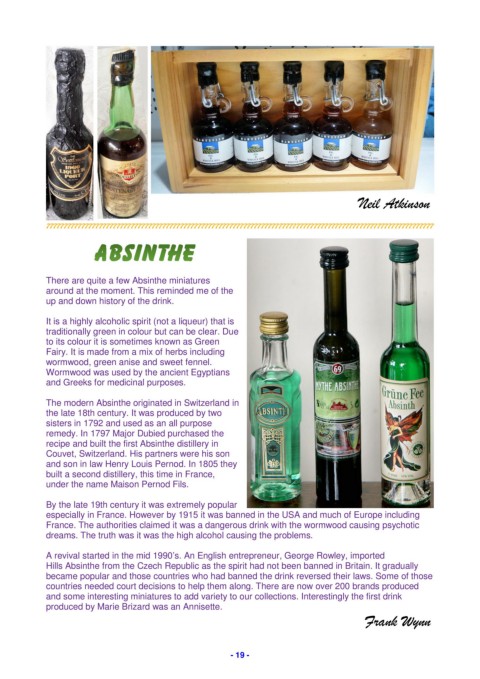
            There are quite a few Absinthe miniatures
            around at the moment. This reminded me of the
            up and down history of the drink.

            It is a highly alcoholic spirit (not a liqueur) that is
            traditionally green in colour but can be clear. Due
            to its colour it is sometimes known as Green
            Fairy. It is made from a mix of herbs including
            wormwood, green anise and sweet fennel.
            Wormwood was used by the ancient Egyptians
            and Greeks for medicinal purposes.

            The modern Absinthe originated in Switzerland in
            the late 18th century. It was produced by two
            sisters in 1792 and used as an all purpose
            remedy. In 1797 Major Dubied purchased the
            recipe and built the first Absinthe distillery in
            Couvet, Switzerland. His partners were his son
            and son in law Henry Louis Pernod. In 1805 they
            built a second distillery, this time in France,
            under the name Maison Pernod Fils.

            By the late 19th century it was extremely popular
            especially in France. However by 1915 it was banned in the USA and much of Europe including
            France. The authorities claimed it was a dangerous drink with the wormwood causing psychotic
            dreams. The truth was it was the high alcohol causing the problems.

            A revival started in the mid 1990’s. An English entrepreneur, George Rowley, imported
            Hills Absinthe from the Czech Republic as the spirit had not been banned in Britain. It gradually
            became popular and those countries who had banned the drink reversed their laws. Some of those
            countries needed court decisions to help them along. There are now over 200 brands produced
            and some interesting miniatures to add variety to our collections. Interestingly the first drink
            produced by Marie Brizard was an Annisette.
                                                                                            Frank Wynn


                                                          - 19 -

